Stroke Prevention: Protect Your Brain, Protect Your Future
Stroke can change a person’s life in minutes affecting movement, speech, memory, and long‑term independence. For many of the individuals and families supported by home care, understanding stroke risk and early warning signs is essential to staying safe, connected, and able to remain at home.
But stroke does not affect all communities equally. Asian Americans are up to 60% more likely to experience a stroke before age 65, and American Indian and Alaska Native adults are 7% more likely to have had a stroke than the overall U.S. population. These differences reflect not only medical risk but also cultural beliefs, access to care, and how symptoms are interpreted within families.
How Culture Shapes Stroke Recognition
In many Asian cultures, sudden dizziness or weakness may be described as “wind illness,” a meaningful traditional concept. In Indigenous communities, stroke often occurs at younger ages, influenced by chronic stress, historical trauma, and barriers to care. These cultural understandings matter, but they can also delay emergency treatment when symptoms are actually signs of stroke.
For home care clients, caregivers, and family members, recognizing this overlap is critical. When symptoms are misunderstood or minimized, precious minutes are lost. During a stroke, every minute counts.
Understanding What a Stroke Is
A stroke happens when blood flow to the brain is blocked or when a blood vessel bursts. Without oxygen, brain cells begin to die within minutes. This can affect mobility, speech, memory, and the ability to live independently — all areas where home care plays a vital role in recovery and long‑term support.
The good news: up to 80% of strokes are preventable with small, consistent lifestyle changes.
Recognizing the Signs: B.E. F.A.S.T.
One of the most important tools for families and caregivers is the B.E. F.A.S.T. method:
These symptoms can appear suddenly. Knowing them helps caregivers act quickly and confidently.
Daily Habits That Protect Brain Health
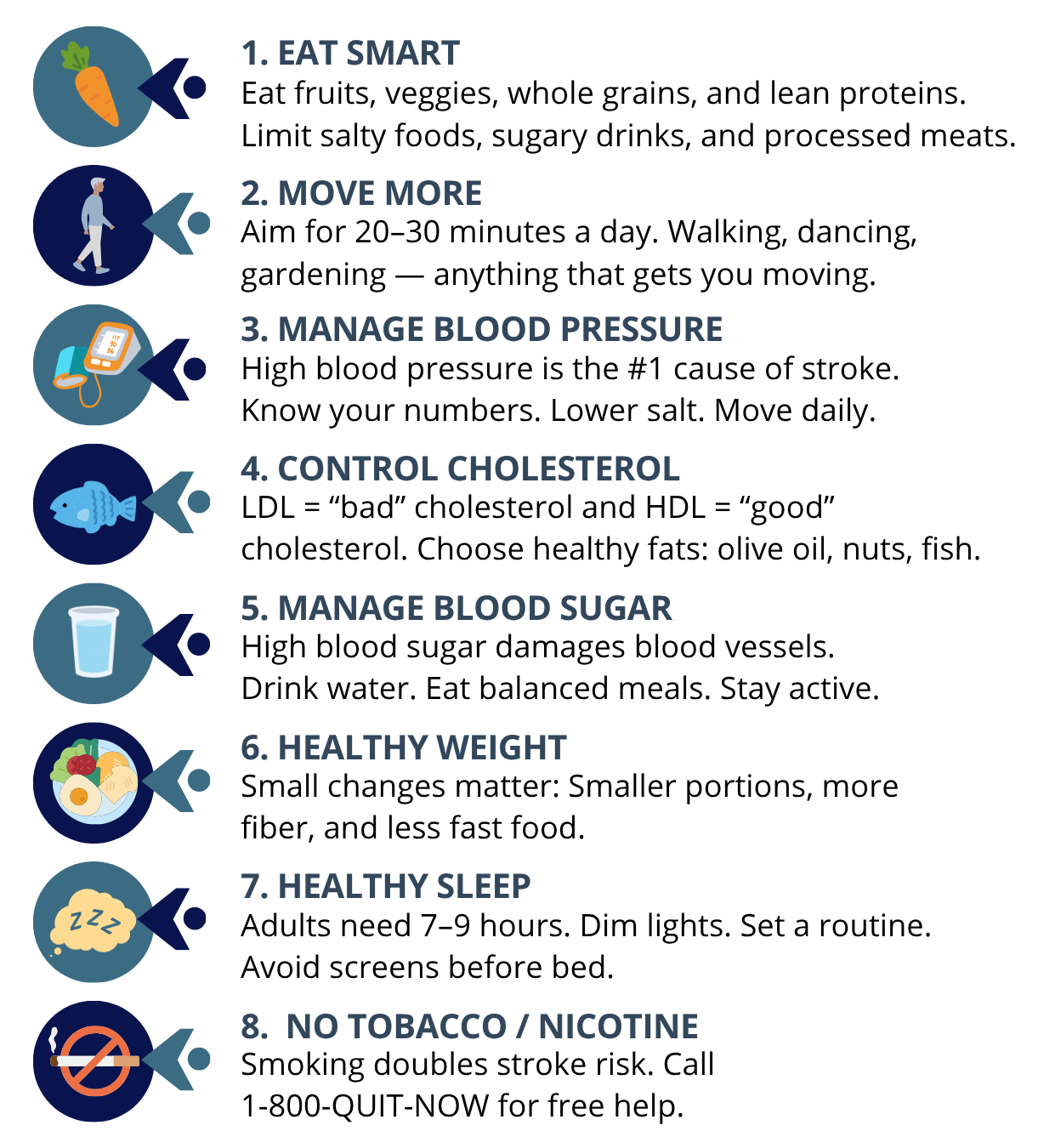
Being proactive with healthy, everyday habits is the first step to stroke prevention. These habits are simple, practical, and can be integrated into daily home care routines:
For home care clients, caregivers can help reinforce these habits through meal support, medication reminders, activity encouragement, and daily routines.
Questions to Bring to Your Next Appointment
Medical visits can feel overwhelming, especially for elders or individuals managing multiple conditions. But we helped make it easier. Here are simple, practical questions to ask your doctor to see if you are at risk for a stroke:
What is my blood pressure?
What is my cholesterol level?
Am I at risk for diabetes?
What changes should I make to lower my stroke risk?
Should I be monitoring anything at home?
These questions help families advocate for themselves and make informed decisions about care.
Community Resources That Support Independence
There are many Minnesota‑based supports that help individuals stay safe and connected at home, including:
These services provide education, transportation, benefits navigation, stroke survivor support, and culturally grounded care — all essential for maintaining independence after a stroke or reducing risk before one occurs.
A Partnership Rooted in Culture and Care
Circle of Life Home Care and the Minnesota Brain Injury Alliance came together to bring culturally relevant, accessible stroke‑prevention information directly to the communities we serve. For families receiving home care, this knowledge strengthens safety, confidence, and long‑term well‑being.