When someone receives care at home, it’s important that they feel respected, understood, and supported. Two ideas help guide the way we care for people: person-centered thinking and culturally sensitive care. These approaches make sure each person is treated as an individual with their own story, preferences, and traditions.
Person-centered thinking means putting the person at the center of every decision. Instead of focusing only on what someone needs help with, we focus on what matters to them. This includes:
Culturally sensitive care means understanding that everyone has a unique cultural background. Culture can include language, traditions, beliefs, family roles, and more. This approach makes sure care respects these parts of a person’s identity. We focus on:
Person-centered thinking and culturally sensitive care fit naturally together. Both focus on treating people with dignity and seeing them as whole individuals.
Together, they create care that is:
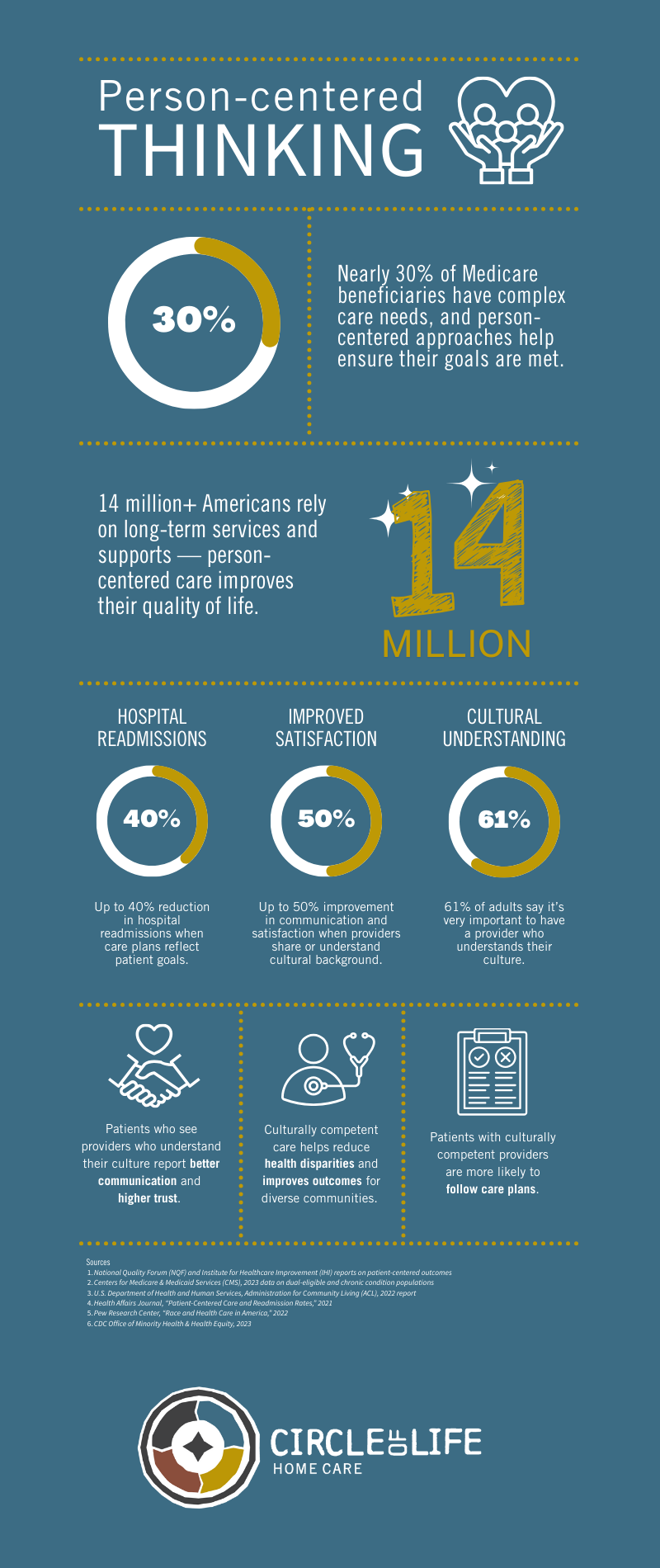
And the data supports the person-centered care model:
We believe care should feel personal, respectful, and culturally meaningful. Our team is trained to listen, learn, and support each person in a way that honors their identity and values.
We work closely with families and communities to make sure care feels right while honoring those we serve.